
Masada is a nightlife venue in Chicago's Logan Square neighborhood built around DJs, electronic music, house, Afrobeats and global sounds.
As the venue evolved, its digital presence needed to evolve with it. The challenge wasn't simply creating a new website; it was making Masada immediately understandable as a nightclub and music destination, from the first Google search to the night of an event.
Masada's physical space had evolved into a nightlife destination, but its digital presence still carried signals from an earlier version of the business.
That created a positioning problem. A customer discovering Masada online needed to immediately understand what the venue is today: a Chicago nightclub centered around DJs, music, rooftop events and nightlife.
The project became an exercise in removing mixed signals and rebuilding the digital experience around one clear identity.
Before designing the website, the first problem to solve was perception.
The new direction moved Masada away from restaurant-oriented language and placed music, nightlife and events at the center of the experience.
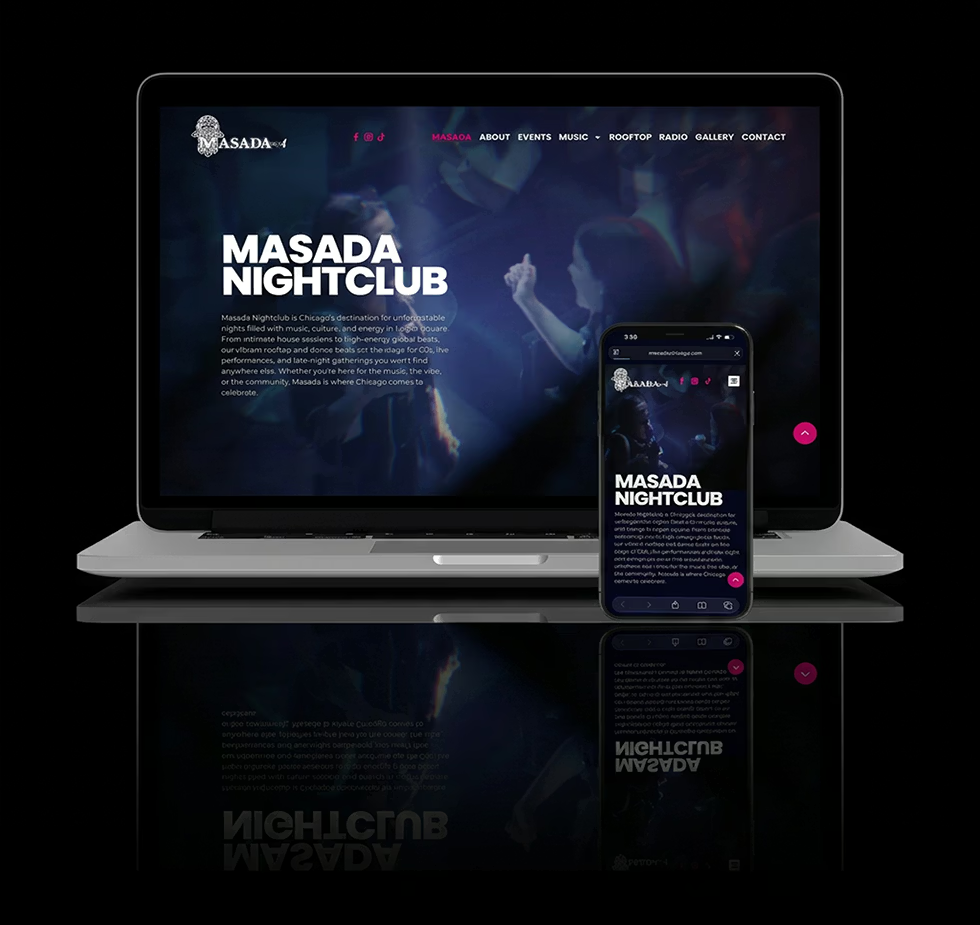
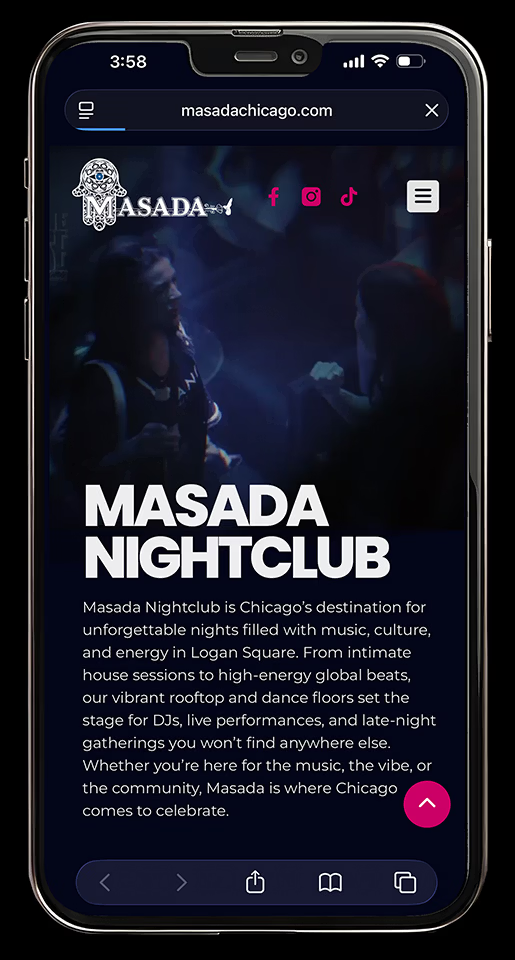
The visual direction followed that positioning. Photography shifted toward DJs, crowds, lighting and the energy of the venue, while dark backgrounds, high-contrast typography and vivid event imagery created an atmosphere closer to what customers experience after dark.But the larger change was in how the website was structured.
Rather than treating the homepage as a traditional venue introduction, upcoming events became part of the primary visual experience. Large event cards allow programming, artists and music styles to become part of the identity of Masada itself; not secondary content hidden inside an events calendar.
The content strategy went deeper than promoting individual nights. Dedicated sections for House, Electronic, Afrobeats and Global Sounds give the music communities behind Masada's programming a permanent place within the website. This creates content that remains relevant even as individual events and lineups change.
The messaging and design were ultimately organized around three ideas: Music · Culture · Energy
The website doesn't just promote where the events happen. It communicates the music and culture that give people a reason to be there.
The website was redesigned around Masada's new positioning, replacing a more general venue experience with a structure centered on nightlife, music and upcoming events.
Events became one of the most prominent parts of the experience, supported by dedicated content for the music styles and communities that regularly shape the venue, including house music, electronic music, Afrobeats and global sounds.
The rooftop, gallery and venue information were then organized around that core experience rather than competing with it.
The website stopped trying to explain what Masada could be and started showing what Masada is.
Upcoming events were moved into the primary content hierarchy, but the goal wasn't to fill the homepage with event flyers.
Many nightlife websites display large numbers of upcoming events at once. For Masada, I took a more curated approach: the homepage presents only four event V-cards at a time, creating a cleaner visual hierarchy and making it easier to understand what's happening next.
That simplicity requires the website to remain active. As events pass, the cards are continuously updated so the homepage stays focused on the most relevant upcoming programming rather than becoming a crowded archive of flyers.
Each card creates a direct path to the information needed to attend, date, time, music, lineup and ticket or signup action; while recurring programming such as Industry Mondayz, Intimate House Sessions and Afrobeats nights maintains its own recognizable identity.
Instead of asking visitors to sort through everything that's coming, the interface focuses their attention on what's next.
EVENT → DETAILS → TICKETS / SIGN UP
Individual events change every week, but the music communities behind them are part of Masada's longer-term identity.
Instead of relying only on temporary event listings, I created dedicated content around Masada's core music categories, including House, Electronic, Afrobeats and Global Sounds.
This gives recurring programming a permanent place within the website while helping both customers and search engines understand the types of nightlife experiences associated with the venue.
Events communicate what's happening tonight. Music pages communicate what Masada is known for.
Masada isn't experienced as a single room. Its multi-level rooftop creates a different atmosphere and supports its own seasonal programming.
I gave the rooftop a dedicated place within the website rather than treating it as another venue feature buried inside an About page.
Photography and event content help communicate that experience before a customer arrives, while the dedicated structure gives rooftop programming a permanent digital destination.
The website reflects the venue as people actually experience it.


Repositioning the website alone wasn't enough. Masada's identity also needed to become consistent across the places where customers discover the venue.
Website content, page titles, headings, structured business information and Google Business Profile content were aligned around Masada as a Chicago nightclub and music venue.
Event posts, photography and video were then used to continuously reinforce that positioning through the venue's Google presence rather than allowing outdated signals to define the business.
The objective wasn't simply greater visibility. It was visibility for the right identity.
The repositioning extended beyond Masada's own website.
External listings and nightlife platforms were reviewed to identify places where outdated categories or descriptions no longer reflected the venue.
Profiles on platforms including TripAdvisor and Do312 were updated toward Masada's current nightclub positioning, while outdated restaurant-oriented signals were removed where possible.
The goal was simple: A customer shouldn't discover one version of Masada on Google and another somewhere else.
Masada's digital presence now communicates a much clearer idea of what the venue represents: nightlife, DJs, music, culture and events.
The website establishes that positioning, event UX makes upcoming programming easier to discover, dedicated music pages build longer-term relevance, and local search connects customers with the same identity beyond the website. From discovering an event on Google to exploring the lineup and arriving at the venue, the experience now tells a more consistent story.
Masada isn't simply presented as a place with events. It's presented as a Chicago nightlife destination.